The peer-reviewed record in full: every paper with its abstract, the
figures it was published with, and its DOI. Read it by year, by
research strand, or by the country and
institution the work was done with, or begin with the
principal investigator’s own
selection.
Work from this laboratory, and
from the director’s earlier collaborations elsewhere, has been chosen
for a journal cover on 11 occasions, 10 of which are shown here.
M. Zaini, A. S. Ansari, J. Perkins, A. Mandal, Y. Fei, A. H. Elfarash, T. Kong, B. Gholipour
Small Methods (2026)5 citations
Chalcogenide glasses are increasingly favoured as the programmable layer of choice in reconfigurable optoelectronic platforms, enabling diverse signal modulation, display, and memory device applications over the past decade.
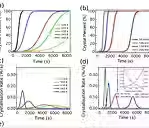
Chalcogenide phase change materials (PCM's) are shown to exhibit a much-overlooked giant switchable volatile thermo-optic response across the visible/telecommunication bands.
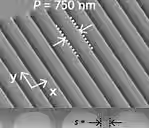
Advanced Optical Materials 13, 21, 2500230 (2025) - Awarded Front cover of the magazineFront cover8 citations
Realizing zero-static power directional dependence of far-field response such as asymmetric transmission (AT) in subwavelength-thickness media at photonic wavelengths is one of the grand challenges in optoelectronics today.
Advances in Physics: X 9, no. 1: 2338285 (2024)1 citation
Nanoionic and photoionic reconfigurable oxides and chalcogenide semiconductors are emerging material platforms for field-based, non-volatile control of electrons and photons in nanoscale optoelectronic device architectures.
In photonic integrated circuits, efficient coupling of light between fibers and waveguides is challenging due to mode area mismatch. In-plane grating couplers (GC) have become popular for their low cost, easy alignment, and design flexibility.
We introduce the feature issue on Reconfigurable Photonic Platforms. This issue presents a broad collection of contributions from across the globe, bringing together different sub-topics on the fundamentals, new research trends, and applications of…
Prabhathan, Patinharekandy, Kandammathe Valiyaveedu Sreekanth, Jinghua Teng, Joo Hwan Ko, Young Jin Yoo, Hyeon-Ho Jeong, Yubin Lee et al
iScience 26, no. 10 (2023)145 citations
Phase Change Materials (PCMs) have demonstrated tremendous potential as a platform for achieving diverse functionalities in active and reconfigurable micro-nanophotonic devices across the electromagnetic spectrum, ranging from terahertz to visible frequencies.
J. Perkins, H. Cheng, C. Craig, D. W. Hewak and B. Gholipour
Nano Letters, 23, 7, 2601–2606 (2023)7 citations
The refractory metal–oxide semiconductors are an overlooked platform for nanophononics that offer alloys with high melting points and tunable optical constants through stoichiometry changes and ion intercalation.
In a reciprocal medium, transmission of electromagnetic (EM) waves is symmetric along opposite directions which restrict design and implementation of various systems in optics and photonics.
B. Gholipour, S. R. Elliott, M. J. Müller and M. Wuttig, D. W Hewak, B. E Hayden, Y. Li, S.S.Jo, R.Jaramillo, R.E. Simpson, J. Tominaga, Y. Cui, A. Mandal, B. J. Eggleton, M. Rochette, M. Rezaei, I. Alamgir, H. M. Shamim, R. Kormokar, A. Anjum, G. Zeweldi, T. S. Karnik and J. J. Hu, S. O. Kasap, G. Belev and A. Reznik
Journal of Physics: Photonics 5 012501 (2023)44 citations
Alloys of sulfur, selenium and tellurium, often referred to as chalcogenide semiconductors, offer a highly versatile, compositionally-controllable material platform for a variety of passive and active photonic applications.
Advanced Optical Materials 9 (24), 2101046 (2021) - Awarded the inside back cover of the magazine.Inside back cover9 citations
Chalcogenide glasses have been widely adopted as a material platform for achieving reconfigurable metamaterials and metasurfaces, primarily through exploiting nonvolatile phase transitions inherent to these semiconductors.
T. Martins, Y. Cui, B. Gholipour, J. Y. Ou, O. Frazão, K. F. MacDonald
Advanced Optical Materials, 2100803 (2021) - Nature Photonics, 15, 717 (2021) - Awarded the inside front cover of the magazine.Inside front cover15 citations
Demonstration of a fiber-integrated non-volatile reconfigurable metasurface providing high-contrast group delay dispersion switching functionality is reported, which may be engineered to operate at wavelengths across the near-infrared (telecoms) band.
H. Li, J. Y. Ou, B. Gholipour, J. K. So, D. Piccinotti, V. A. Fedotov, and N. Papasimakis
Appl. Phys. Lett. 118, 261103 (2021)3 citations
We demonstrate experimentally that the distribution of the decay rates of nitrogen-vacancy centers in diamond becomes narrower by over five times for nanodiamonds embedded in thin chalcogenide films.
M. Ramos, V. Bharadwaj, B. Sotillo, B. Gholipour, A. N. Giakoumaki, R. Ramponi, S. M. Eaton, and C. Soci
Appl. Phys. Lett. 119, 031104 (2021)5 citations
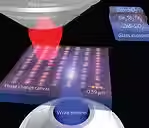
Simple and direct prototyping methods are ideal for large-scale delivery of cognitive photonic hardware. Here, we choose ultrafast laser writing as a direct fabrication technique to later demonstrate all-optical synaptic-like performance along the laser-written waveguides in a chalcogenide glass.
Real-time monitoring is critical to improving safety and efficiency in chemical factories, oil and gas reservoirs, refineries, as well as land/marine/air transportation infrastructure.
Journal of Physics : Photonics 3 022005 (2021)51 citations
Chalcogenide phase change semiconductors have played a crucial role in the evolution of photonic technologies. From their decades-long utilization at the core of optical disks to their emergence as a highly promising reconfigurable component for a…
The chalcogenide semiconductor antimony telluride exhibits a sub-unitary refractive index as low as 0.7 at mid- to near-UV wavelengths between 220 and 400 nm, with the spectral width of the sub-unitary band, minimum index and associated extinction coefficient being controllable functions of alloy composition.
T. Martins, B. Gholipour, D. Piccinotti, K. F. MacDonald, A. C. Peacock, O. Frazão and N. I. Zheludev
APL Photonics 4, 111301 (2019)27 citations
We report on the experimental demonstration of an optical-fiber-integrated, nonvolatile transmission switching device. The operating mechanism exploits a cavity resonance spectral shift associated with an induced change in the refractive index of a high-index thin film on the polished side facet of the fiber.
The emergence of artificial intelligence and machine learning techniques and their rapid proliferation across a myriad of industries provide a driving force for improving computing, data storage, and telecommunication hardware architectures.
B. Gholipour, D. Piccinotti, A. Karvounis, K. F. MacDonald, and N. I. Zheludev
Nano Letters 19, 1643 (2019)78 citations
Photonic materials with tunable and switchable ultraviolet (UV) to high-energy visible (HEV) optical properties may benefit applications such as sensing, high-density optical memory, beam-steering, adaptive optics, and light modulation.
A variety of alternative plasmonic and dielectric material platforms, among them nitrides, semiconductors, and conductive oxides, have come to prominence in recent years as means to address the shortcomings of noble metals (including Joule losses…
A. Karvounis, B. Gholipour, K. F. MacDonald, and N. I. Zheludev
Advanced Materials 31, 1804801 (2019) - Awarded the front cover of the magazine.Front cover26 citations
Electrostriction is a property of all naturally occurring dielectrics whereby they are mechanically deformed under the application of an electric field.
It has recently been shown that holographically nanostructured surfaces can be employed to control the wavefront of (predominantly plasmonic) optical-frequency light emission generated by the injection of medium-energy electrons into a gold surface.
D. Piccinotti, B. Gholipour, J. Yao, K. F. MacDonald, B. E. Hayden and N. I. Zheludev
Advanced Optical Materials 1800395 (2018) - Awarded the back cover of the magazineBack cover12 citations
When an array of subwavelength apertures in a metal film is filled with a chalcogenide semiconductor acting as a low-epsilon medium at optical frequencies, an increase in transmission is observed over a broad range of plasmonic frequencies, and found to be enabled by “laminar” flow of energy through the chalcogenide inclusions.
H. N. S. Krishnamoorthy, B. Gholipour, N. I. Zheludev and C. Soci
Advanced Optical Materials,1800332 (2018) - Awarded the inside cover of the magazineInside cover20 citations
Phase change materials have enabled the realization of dynamic nanophotonic devices with various functionalities. Reconfigurable hyperbolic metamaterials integrated with such elements have been demonstrated in the past but the volatile nature of…
Non-volatile temperature-induced structural phase transitions such as those found in chalcogenide glasses are known to lead to strong changes in optical properties and are widely used in rewritable optical disk technology.
Amorphous bismuth telluride (Bi:Te) provides a composition-dependent, CMOS-compatible alternative material platform for plasmonics in the ultraviolet-visible spectral range.
B. Gholipour, A. Karvounis, J. Yin, C. Soci, K. F. MacDonald and N. I. Zheludev
Nature Asia Materials, 10, 533-539 (2018)128 citations
Chalcogenides, alloys based on group-16 ‘chalcogen’ elements (sulfur, selenium, and tellurium) covalently bound to ‘network formers’ such as arsenic, germanium, antimony, and gallium, have a variety of technologically useful properties, including…
M. I. Stockman, K. Kneipp, S. I. Bozhevolnyi, S. Saha, A. Dutta, J. Ndukaife, N. Kinsey, H. Reddy, U. Guler, V. M. Shalaev, A. Boltasseva, B. Gholipour, H. N. S. Krishnamoorthy, K. F. MacDonald, C. Soci, N. I. Zheludev, V. Savinov, R. Singh, P. Groß, C. Lienau, M. Vadai, M. L. Solomon, D. R. Barton III, M. Lawrence, J. A. Dionne, S. V. Boriskina, R. Esteban, J. Aizpurua, X. Zhang, S. Yang, D. Wang, W. Wang, T. W. Odom, N. F. Van Hulst, and M. Kling
Journal of Optics, 20 043001 (2018)300 citations
Plasmonics is a rapidly developing field at the boundary of physical optics and condensed matter physics. It studies phenomena induced by and associated with surface plasmons, elementary polar excitations bound to surfaces and interfaces of good nanostructured metals.
B. Sotillo, A. Chiappini, V. Bharadwaj, M. R. Vazquez, T. T. Fernandez, S. Rampini, M. Ferrari, R. Ramponi, P. Fernandez, B. Gholipour, C. Soci, S. M. Eaton.
Optical materials, 72, 626-631 (2017)10 citations
We have performed high repetition rate femtosecond laser bulk modification of TiO₂-SiO₂ based glass (Schott N-SF8 glass), leading to a decrease in the refractive index near the focal volume.
Q. Wang, G. H. Yuan, K.S. Kiang, K. Sun, B. Gholipour, E. T. F. Rogers, K. Huang, S. S. Ang, N. I. Zheludev and J. H. Teng.
Applied physics letters, 110, 201110 (2017) - Selected as Editors Pick, May 201727 citations
We demonstrate a grayscale photolithography technique which uses a thin phase-change film as a photomask to locally control the exposure dose and allows three-dimensional (3D) sculpting photoresist for the manufacture of 3D structures.
B. Gholipour, G. Adamo, D. Cortecchia, H. N. S. Krishnamoorthy, M. D. Birowosuto, N. I. Zheludev, C. Soci.
Advanced Materials, Vol 29, 9, 1604268 (2017) - Awarded the Back Cover of the magazine.Back cover149 citations
Organometallic perovskites, solution-processable materials with outstanding optoelectronic properties and high index of refraction, provide a platform for all-dielectric metamaterials operating at visible frequencies.
We present a high-throughput and scalable technique for the production of metal nanowires embedded in glass fibres by taking advantage of thin film properties and patterning techniques commonly used in planar microfabrication.
A. Karvounis, B. Gholipour, K. F. MacDonald and N. I. Zheludev.
Applied Physics Letters, Vol.109, 051103 (2016) - Selected as Editors Pick, Aug 2016.260 citations
We harness non-volatile, amorphous-crystalline transitions in the chalcogenide phase-change medium germanium antimony telluride (GST) to realize optically-switchable, all-dielectric metamaterials.
W. Dong, M. Krbal, J.Kalikka, X.Y. Chin, B. Gholipour, C. Soci, P. J. Fons, K. V. Mitrofanov, L. Chen and R. E. Simpson.
Thin Solid Films, pp.80-85 (2016)20 citations
This work reveals that doping Ag into Sb₂S₃ substantially decreases its crystallisation temperature. We show that applying an electric field to Sb₂S₃ through Ag electrodes provides control of the crystallisation temperature and crystallisation rate.
Q. Wang, E. Rogers, B. Gholipour, C. H. Wang, G. H. Yuan, J. H. Teng, N. I. Zheludev.
Nature Photonics, Vol.10 pp.60-65 (2016) - Awarded the Front cover of the magazine.Front cover1191 citations
Photonic components with adjustable parameters, such as variable-focal-length lenses or spectral filters, which can change functionality upon optical stimulation, could offer numerous useful applications.
JMS - Materials in Electronics, Vol.26(7) pp.4763-4769 (2015)3 citations
We show that phase change media based on the gallium and lanthanum chalcogenides can outperform the well know benchmark performance of germanium antimony telluride devices in two key specifications thermal stability and power consumption.
We demonstrate that optical activity in amorphous isotropic thin films of pure Ge₂Sb₂Te₅ and N-doped Ge₂Sb₂Te₅N phase-change memory materials can be induced using rapid photo crystallisation with circularly polarised laser light. The new anisotropic phase transition has been confirmed by circular dichroism measurements.
B. Gholipour, P. Bastock, C. Craig, K. Khan, D. Hewak, C. Soci.
Advanced Optical Materials, Vol.3(5) pp.635-641 (2015) - Awarded the Frontispiece Cover of the magazine - Selected as Top 10 paper of the year 2015.Frontispiece cover130 citations
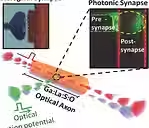
In the pursuit of all-optical brain-like computing, optical axons and photonic synapses are demonstrated using metal-sulphide microfibers, which allow the generation and propagation of optical action potentials.
A. Tittl, A. K. U. Michel, M. Schäferling, X. Yin, B. Gholipour, L. Cui, M. Wuttig, T. Taubner, F. Neubrech, and H. Giessen.
Advanced Materials, 27, 4597-4603 (2015) - Awarded the Front cover of the magazine.Front cover602 citations
A switchable perfect absorber with multispectral thermal imaging capability is presented. Aluminum nanoantenna arrays above a germanium antimony telluride (GST) spacer layer and aluminum mirror provide efficient wavelength-tunable absorption in the mid-infrared.
Carrier-type reversal to enable the formation of semiconductor p-n junctions is a prerequisite for many electronic applications. Chalcogenide glasses are p-type semiconductors and their applications have been limited by the extraordinary difficulty in obtaining n-type conductivity.
We report amorphous GaLaSO-based resistive switching devices, with and without Pb-implantation before deposition of an Al active electrode, which switch due to deposition and dissolution of Al metal filaments.
Nano-scale MoS₂ thin films are successfully deposited on a variety of substrates by atmospheric pressure chemical vapor deposition (APCVD) at ambient temperature, followed by a two-step annealing process.
R. Huang, K. Sun, K. S. Kiang, R. Chen, Y. Wang, B. Gholipour, D. W. Hewak, C. H. de Groot.
Semiconductor Science and Technology, Vol.29(9) pp.095003 (2014)22 citations
Ge₂Sb₂Te₅ (GST) phase change nanowires have been fabricated using a top-down spacer etch process. This approach enables controls over the dimension and location of the nanowires without affecting the electrical properties.
M.A Hughes, R.M Gwilliam, K. Homewood, B. Gholipour, D.W Hewak, T-H Lee, S.R. Elliott, T Suzuki, Y. Ohishi, T. Kohoutek, R.J. Curry.
Optics Express, Vol.21(8101) (2013)23 citations
Reaction order in Bi-doped oxide glasses depends on the optical basicity of the glass host. Red and NIR photoluminescence (PL) bands result from Bi²⁺ and Biₙ clusters, respectively. Very similar centers are present in Bi- and Pb-doped oxide and chalcogenide glasses.
Non-volatile, bidirectional, all-optical switching in a phase-change metamaterial delivers high-contrast transmission and reflection modulation at near- to mid-infrared wavelengths in device structures down to ≈1/27 of a wavelength thick...
Physica Status Solidi B, Vol.250(5), pp.994-998 (2013)11 citations
The phase change technology behind the current rewritable optical disks and the latest generation of electronic memories has provided clear commercial and technological advances for the field of data storage; by virtue of the many key attributes chalcogenide materials offer.
Human memory can be primed. Expose the brain, even unconsciously, to a word or object, and in subsequent exposures, the memory synapses are faster, and more details are remembered for longer times (1). Why not do the same with the electronic memories in our computers, phones, digital cameras, and game consoles?
Phase changes in chalcogenides such as Ge₂Sb₂Te₅ can be exploited in non-volatile random-access memory, with fast crystallization crucial for device operation.
Differential scanning calorimetry (DSC) is widely used to study the stability of amorphous solids, characterizing the kinetics of crystallization close to the glass-transition temperature Tg.
We present femtosecond laser-induced forward transfer of focused ion beam pre-machined discs of crystalline magneto-optic yttrium iron garnet (YIG) films. Debris-free circular micro-discs with smooth edges and surface uniformity have been successfully printed.
C. C. Huang, B. Gholipour, K. Knight, J. Y. Ou, and D. W. Hewak.
Advances in OptoElectronics, 840348 (2012)10 citations
Germanium antimony (Ge-Sb) thin films with tuneable compositions have been fabricated on SiO₂/Si, borosilicate glass, and quartz glass substrates by chemical vapour deposition (CVD).
M Feinaeugle, CL Sones, E Koukharenko, B Gholipour, DW Hewak, R. W. Eason
Applied Physics A, Vol.112 (4), pp.1073-1079 (2012)20 citations
We present a laser-based transfer method for the novel application of fabricating elements for planar thermoelectric devices. Thin films of thermoelectric chalcogenides (Bi₂Te₃, Bi₂Se₃ and Bi₀.₅Sb₁.₅Te₃) were printed via laser-induced forward transfer (LIFT) onto polymer-coated substrates over large areas of up to ∼15 mm² in size.
C. C. Huang, B. Gholipour, J. Y. Ou, K. Knight and D. W. Hewak.
Electronics Letters, Vol.47, pp.288–289 (2011) - Selected as paper of the month.15 citations
A prototype Ge-Sb-Te thin-film phase-change memory device has been fabricated and reversible threshold and phase change switching demonstrated electrically, with a threshold voltage of 1.5–1.7 V. The Ge-Sb-Te thin film was fabricated by chemical…
We demonstrate an innovative concept for nanoscale electro-optic switching. It exploits the frequency shift of a narrow-band Fano resonance mode in a plasmonic planar metamaterial induced by a change in the dielectric properties of an adjacent chalcogenide glass layer.
Every institution with an address on one of the papers above, under the country it is in. 46 of the 55 name at least one institution outside the laboratory; the other 9 were written inside the group.
Each marker is a country, sized by how many papers carry an address there. The countries below carry the same figure as a numeral, and the institutions in each are listed under them, with the years their address appears.
The 60 institutions, by country
Australia
Canada
China
Czech Republic
Denmark
France
Germany
Italy
Japan
Portugal
Singapore
South Korea
Spain
Taiwan
United Kingdom
United States
On two papers the University of Southampton address is the group lead’s own and no other author’s.